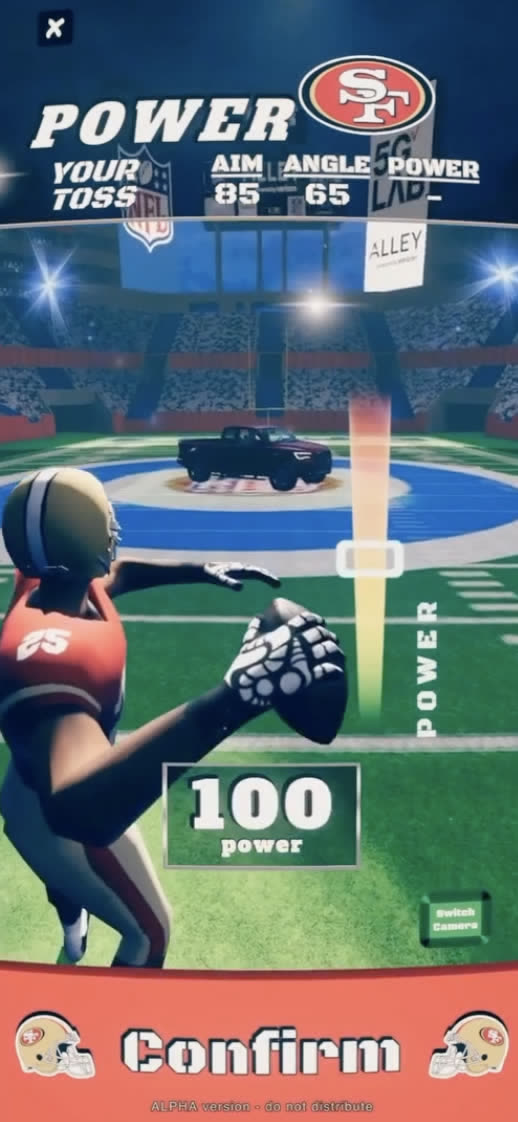
NFL Ultra Toss
Won Verizon's $400K 5G challenge, authored a patented asynchronous multiplayer system, and shipped it at Super Bowl LIV.
The challenge
Verizon ran an open challenge: use the NFL brand in a novel way, built on 5G, a technology not yet widely available to the public. That was the whole prompt.
The hard part wasn't executing a known idea. It was inventing the right one from a near-blank brief. We entered as Juncture Media, won the $400,000 prize, and built the game for Super Bowl LIV.
The technical bar was just as steep: support 40,000 or more simultaneous connections and deliver the whole experience, start to finish, in the few minutes of a live NFL halftime window.
Role & scope
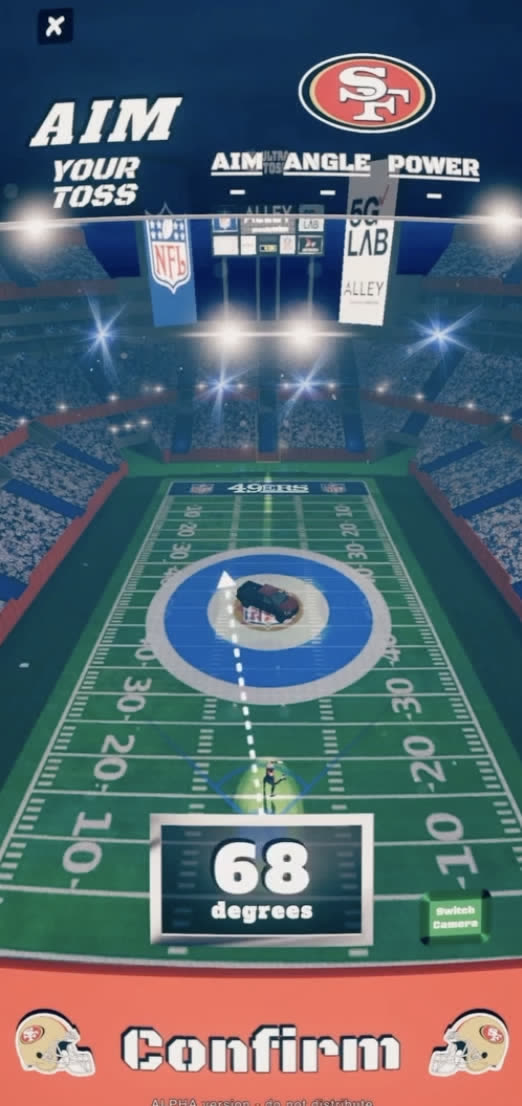
I designed the toss mechanic, the asynchronous multiplayer systems design, onboarding, and the full UX flow. The exceptions were parts of the technical backend and some of the edge computing work.
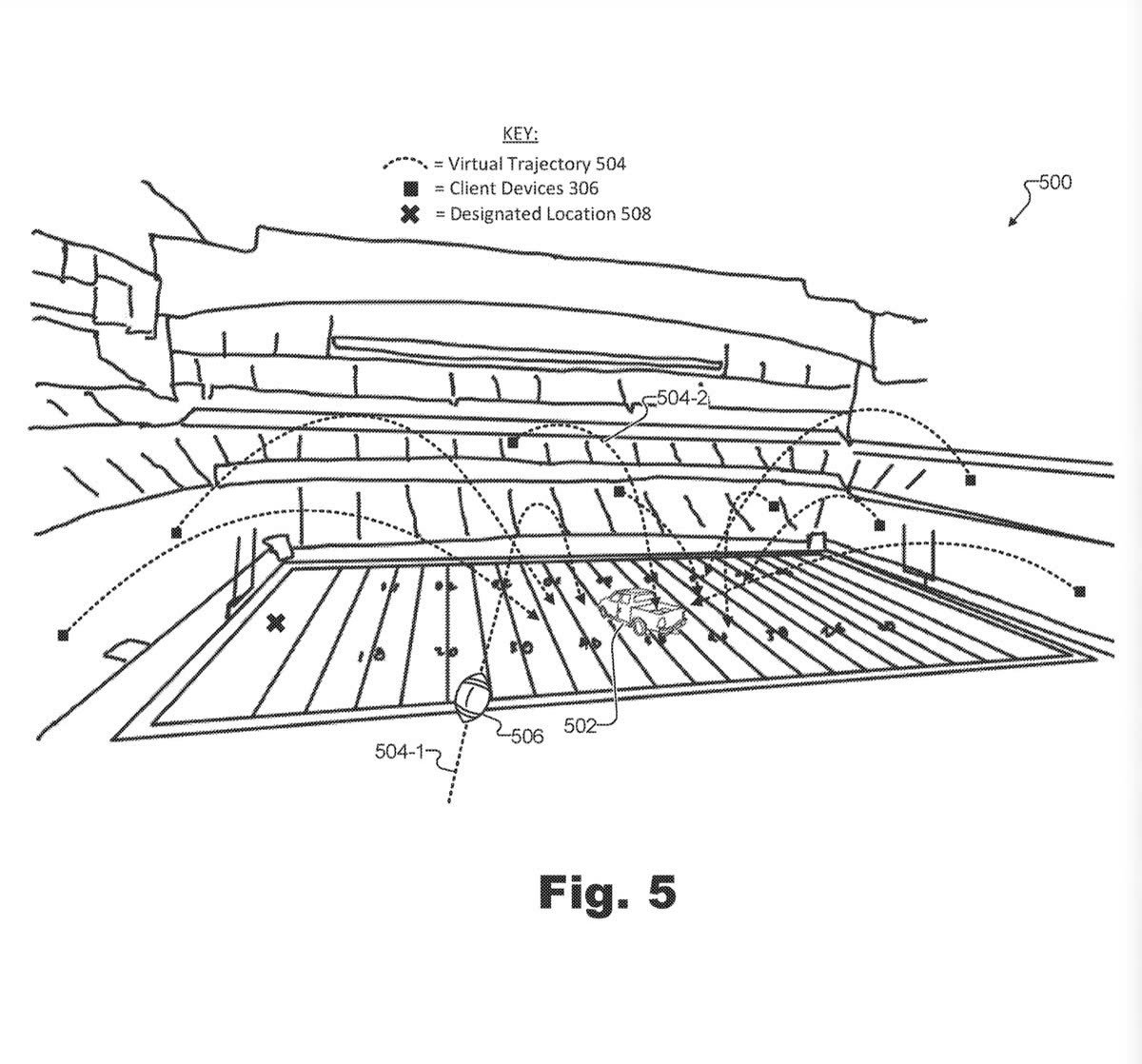
Authored U.S. Patent 11,446,573, a network-based multiplayer architecture deployed at Super Bowl LIV.
Process: the decisions
Inventing the concept from an open brief
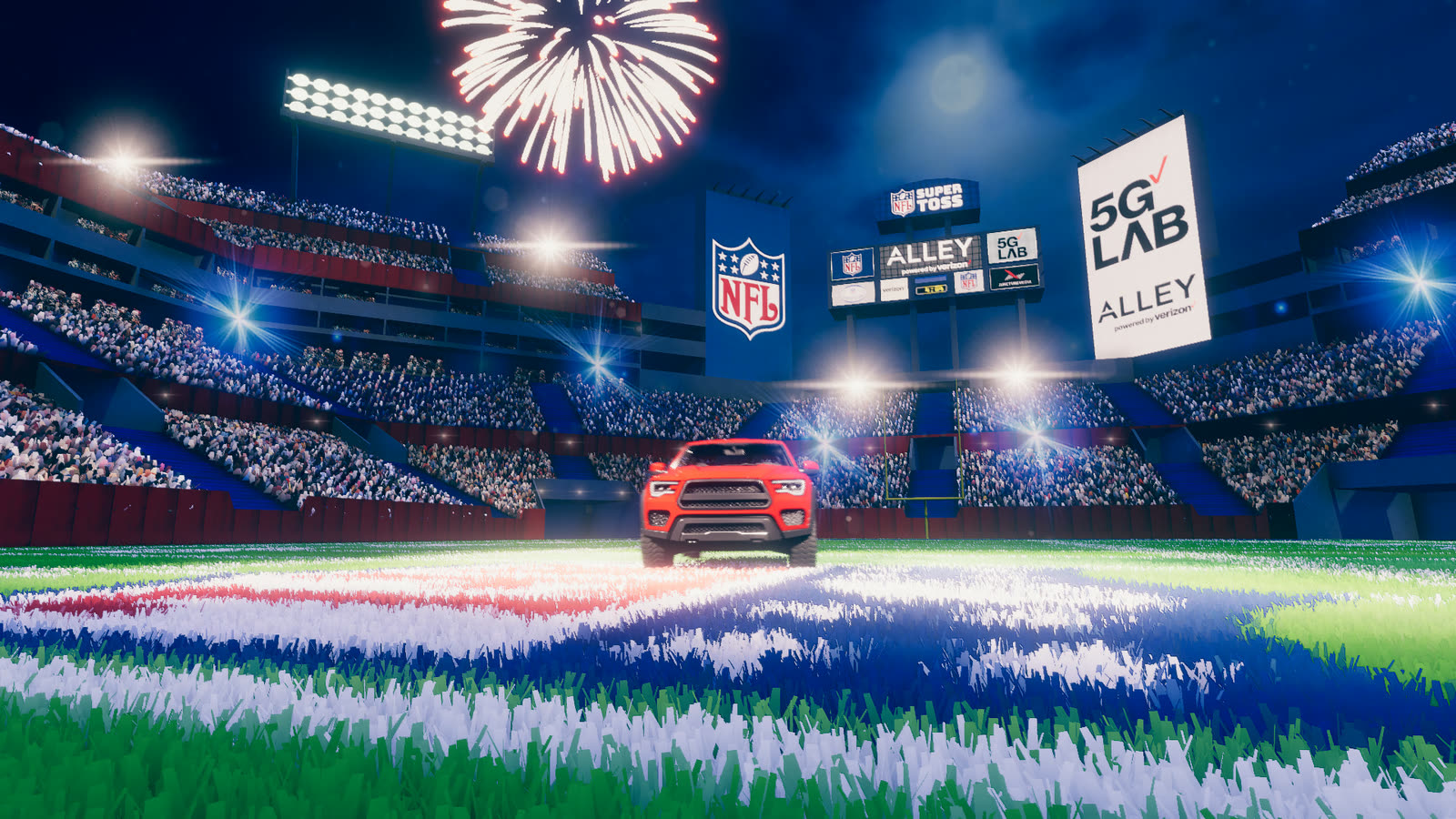
The idea came from two places. HQ Trivia had shown that a single live event could hold a massive audience all playing at once. And I remembered a bit from Minnesota Twins games as a kid: during the seventh-inning stretch, one fan got picked from the stands to throw a baseball into the bed of a truck parked on the field. Land it, win the truck.
Ultra Toss combined the two. Take a real stadium contest I had seen firsthand and make it massive multiplayer, so every fan in the building could play at once instead of one person pulled from the crowd. We won the open challenge on that concept, then built it for Super Bowl LIV.
Why asynchronous multiplayer
Two reasons drove the asynchronous design. First, real-time networking at 40,000 or more simultaneous connections would have caused serious problems. An asynchronous architecture solved the real-time networking headaches a system that size would otherwise hit.
Second, the toss physics had to be genuinely accurate, a real contest of skill rather than a rushed approximation. Being asynchronous gave the system room to compute a mathematically sound physics result first, then render and serve the outcome, instead of racing a live clock. Local edge servers deployed inside the stadium made that asynchronous experience feel almost real-time to the tens of thousands playing at once.
Designing the four camera streams
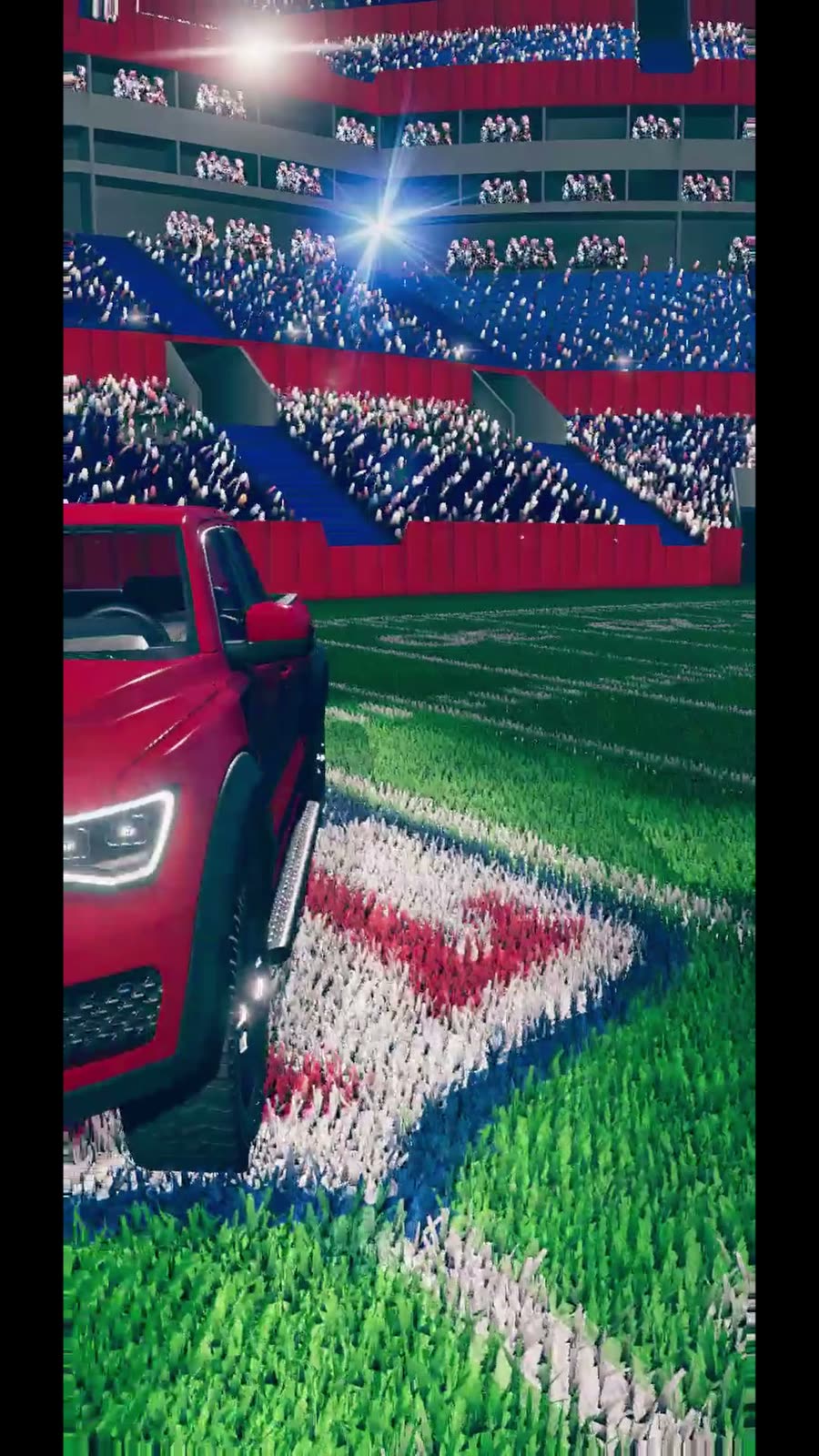
The four spectator angles, Global, POV, Top, and Winner's POV, were not a separate feature. Every player's toss was already rendered as an individual high-resolution video rather than simulated live on their phone. That choice let the team add post-processing and polish that would have been impossible to guarantee across tens of thousands of different devices.
Once the system was rendering a unique video for every one of 40,000-plus players, serving several camera angles from each result was a natural, low-cost extension of infrastructure that already existed. More angles would have been easy to add.
Outcome
Deployed at Super Bowl LIV in February 2020.
Verizon holds the usage metrics, so the public story stays qualitative: a $400K challenge win, a patented system, and a Super Bowl deployment.
Media